
Transparency Notice: This post contains affiliate links. As an Amazon Associate, we earn a commission from qualifying purchases at no extra cost to you. Some of the design concepts featured in this post were created with AI to provide inspiration and visual ideas for your home.
Small apartment living rooms can be surprisingly challenging to design. With limited square footage, multifunctional needs, and furniture that must work extra hard, it’s easy for a room to feel cramped or visually busy. But with the right layout—and a few intentional styling choices—you can transform even the smallest living room into a space that feels open, inviting, and beautifully cohesive.
Below are eight proven small apartment living room layouts that solve common space challenges and help you make the most of your square footage. Along with layout ideas, you’ll also find practical styling tips, smart solutions for frequently asked questions, and curated shopping recommendations to help bring these layouts to life.
8 Small Apartment Living Room Ideas That Maximize Space and Style
1. Create Flow With Floating Furniture
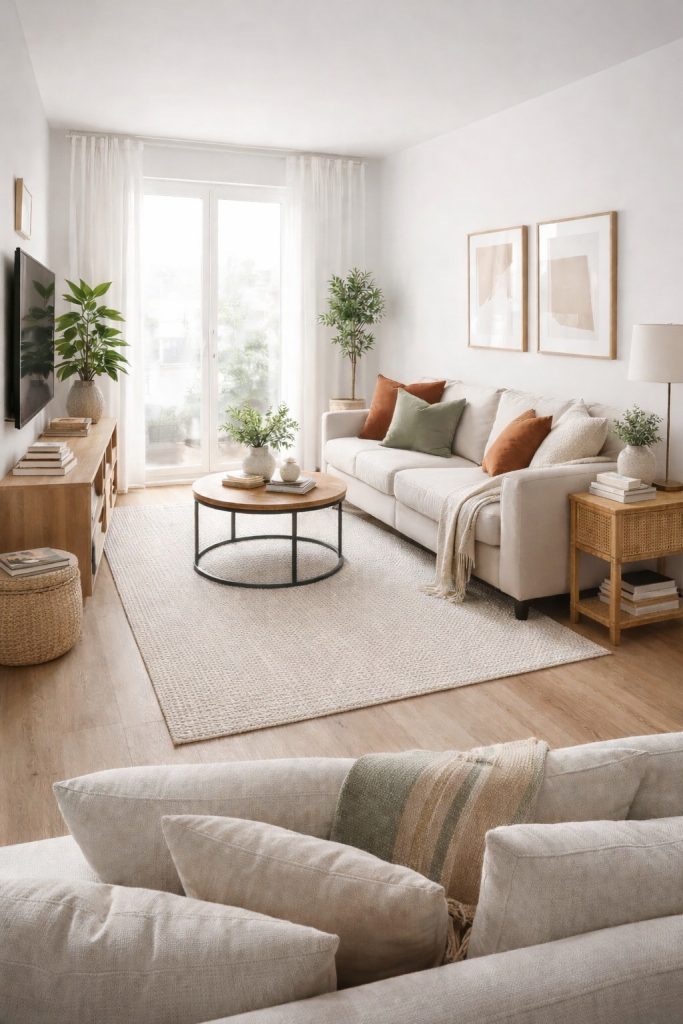
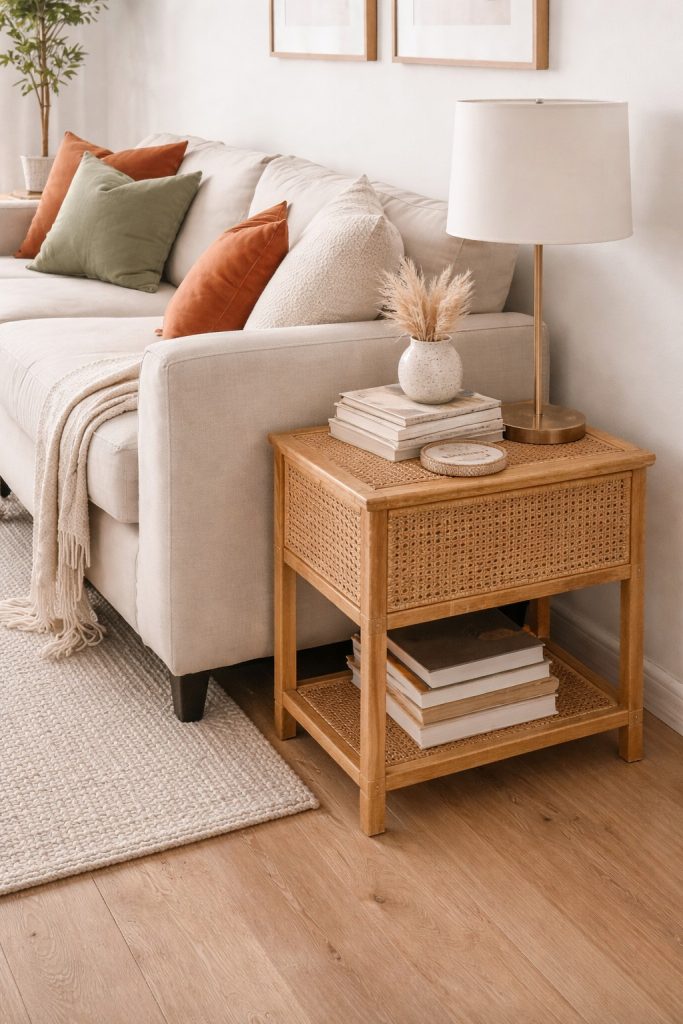
Floating your sofa a few inches away from the wall instantly makes a small living room feel more open, breathable, and intentionally arranged. In these examples, the subtle “lift”—visible sofa legs, soft spacing behind the furniture, and a clean, styled nightstand—creates a sense of flow that brightens the room and keeps the layout from feeling cramped.
2. Make the Most of a Long, Narrow Space
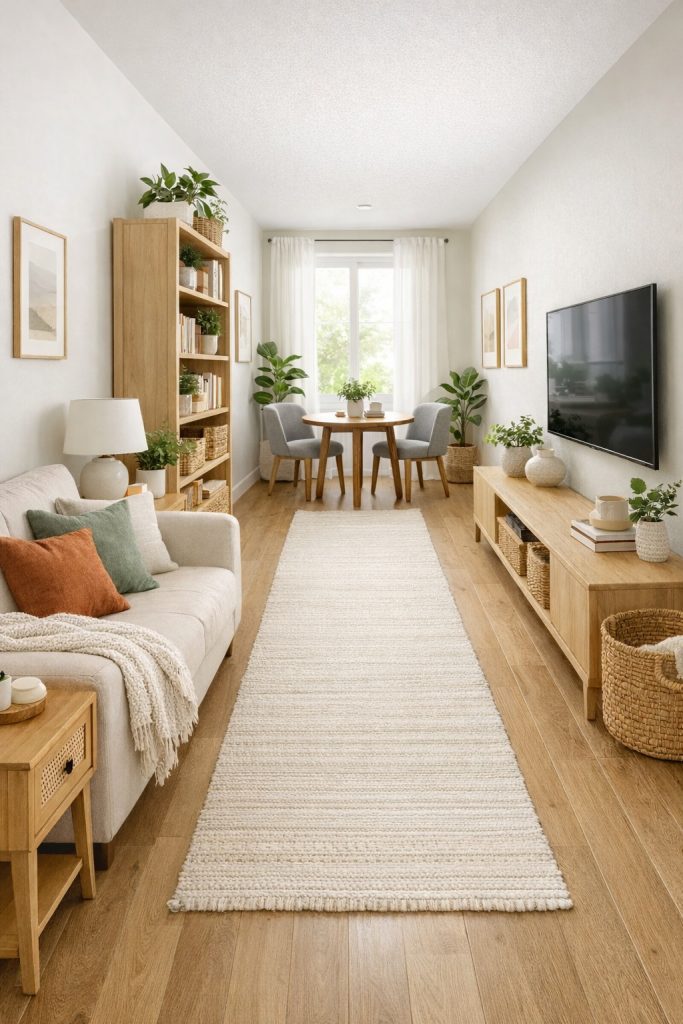
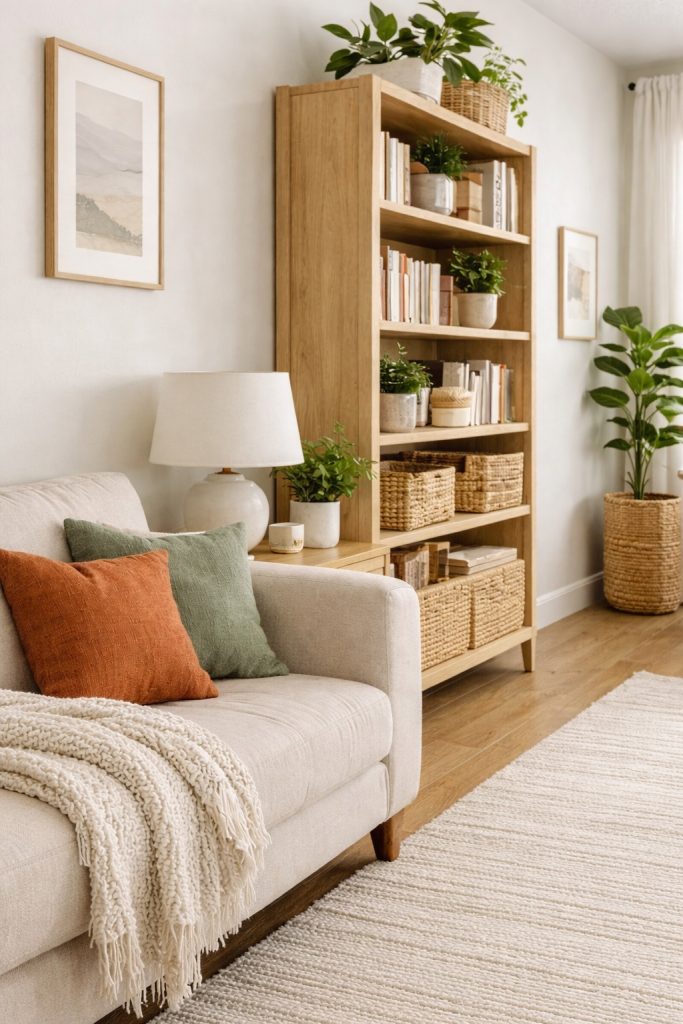
Turning a long or narrow apartment living room into clearly defined zones helps break up the “hallway” feel and makes the space more versatile. These images show how placing a slim sofa at one end, a transparent bookshelf in the middle, and a dining or workspace at the far end creates balance and structure without interrupting the flow.
3. Maximize Corners With an L-Shaped Sofa
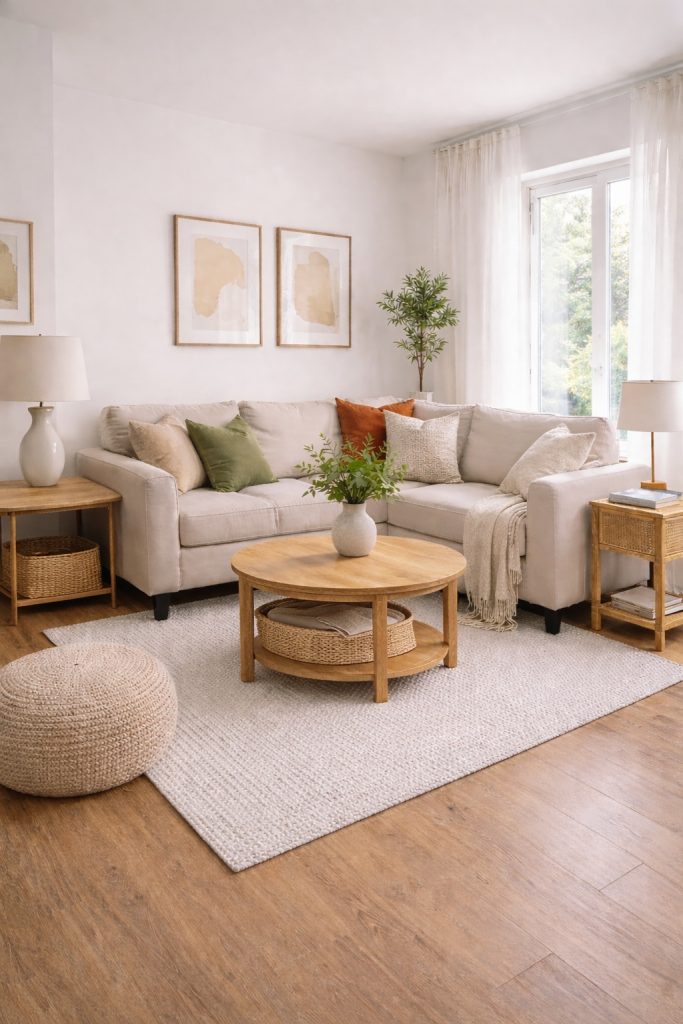
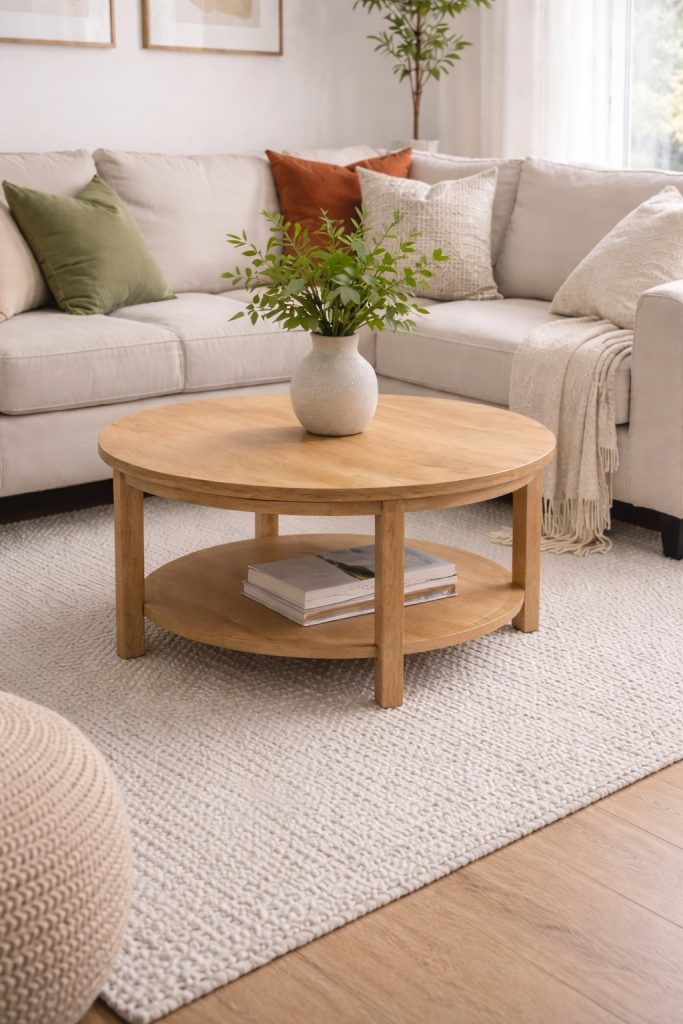
An apartment-friendly L-shaped sofa tucks neatly into a corner, offering comfortable seating while keeping the room’s center open and easy to move through. The wide shot shows how the sectional creates a defined lounging zone, while the close-up highlights cozy textures and smart use of corner space.
4. Brighten the Room by Facing the Window
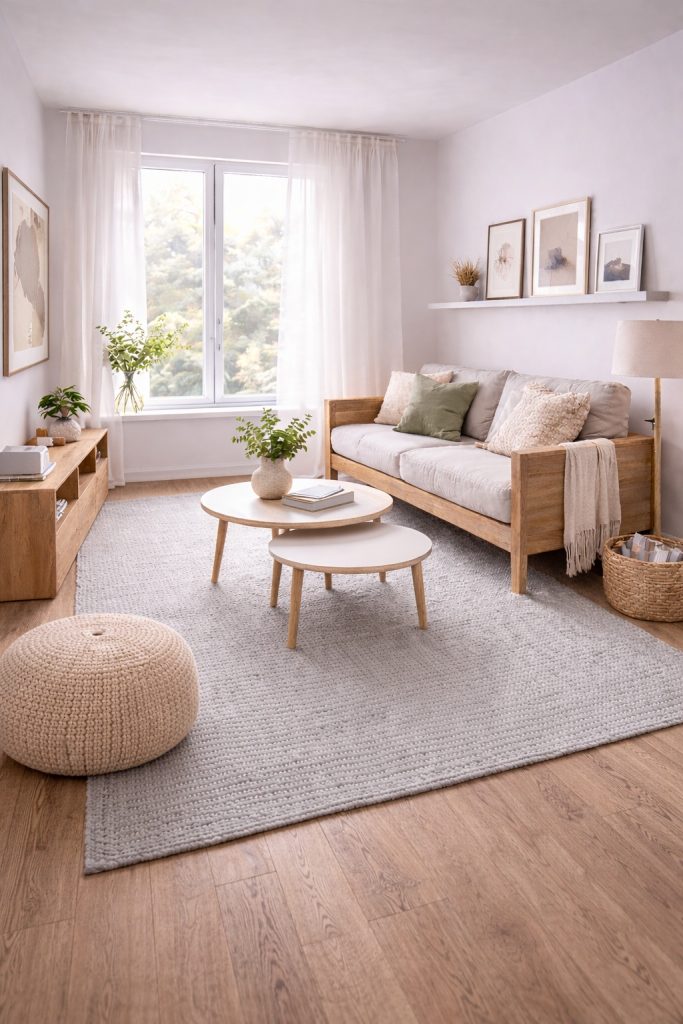
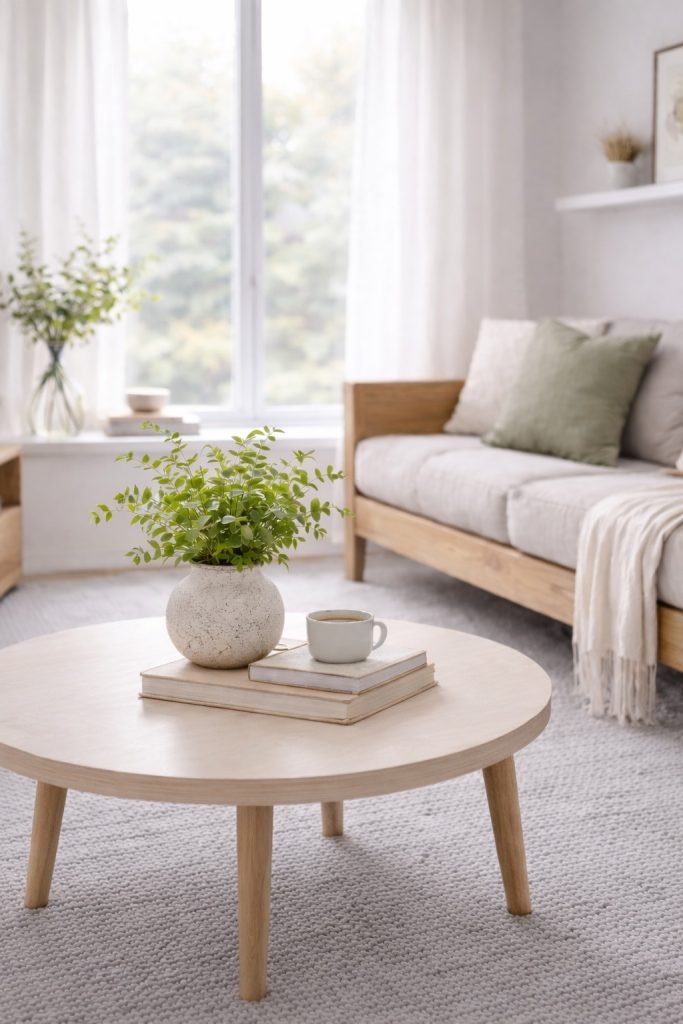
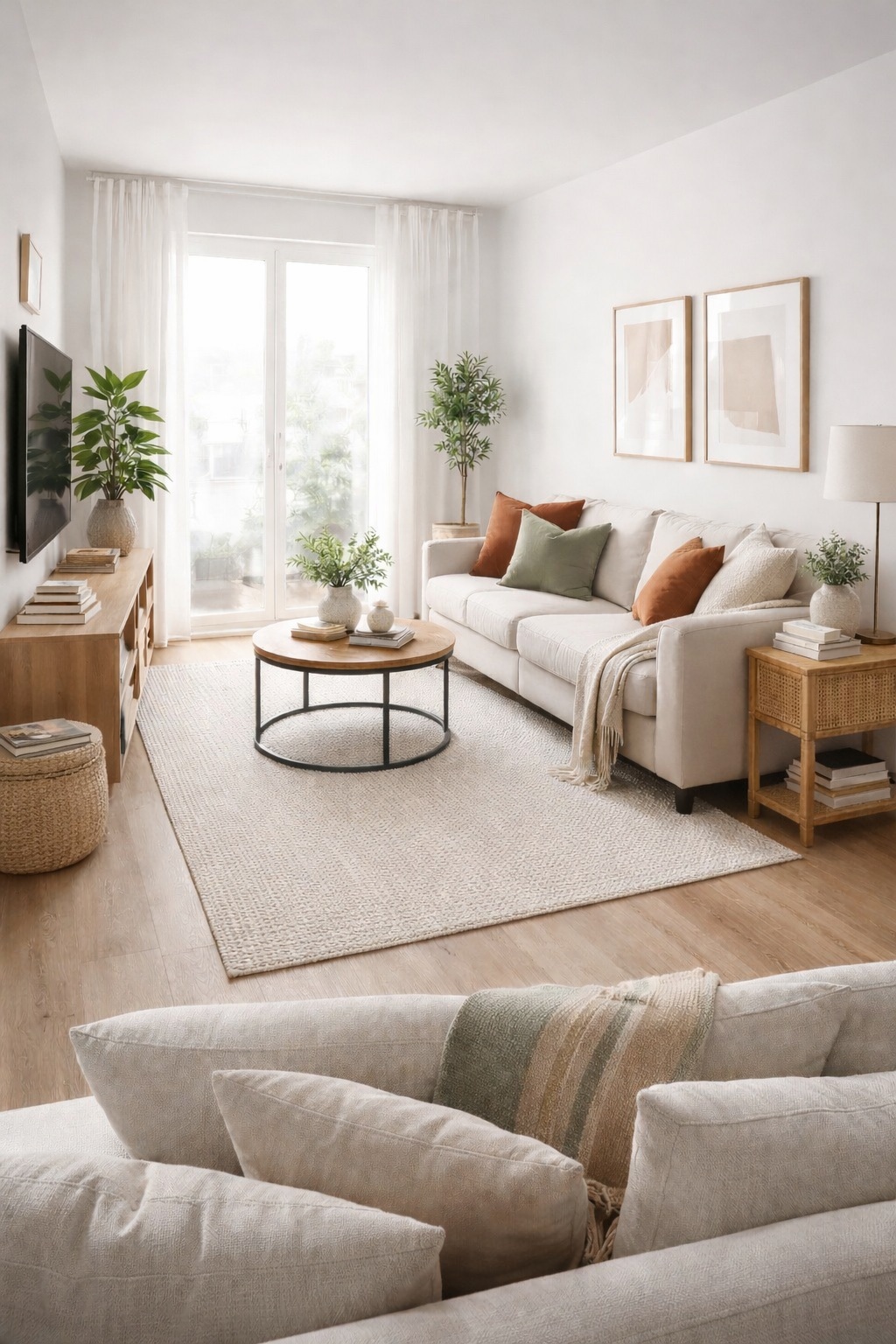
Positioning the sofa toward a window allows natural light to become a defining design element, making the room feel brighter and more open. Paired with soft neutrals, light woods, and sheer curtains, this arrangement creates a calming, airy atmosphere. The detail shot emphasizes textures, plants, and reflective surfaces that amplify light throughout the room.
Shopping Recommendations for Ideas 1–4
Build a flexible and inviting foundation for small living rooms with pieces that support flow, maximize corners, and brighten the space.
5. Save Space With a Wall-Mounted Swivel TV
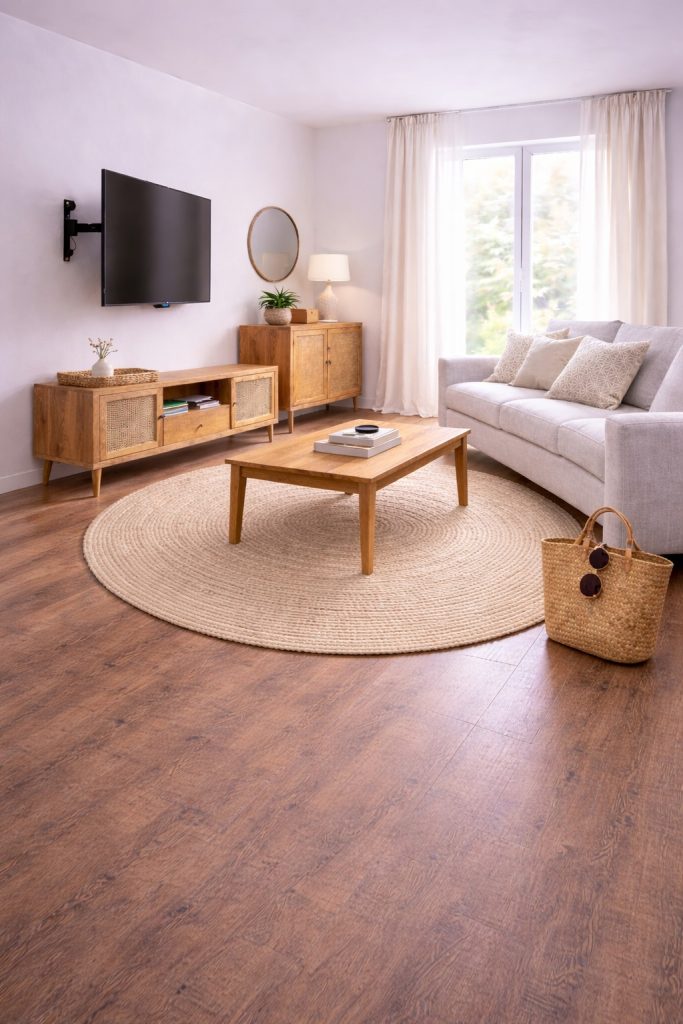
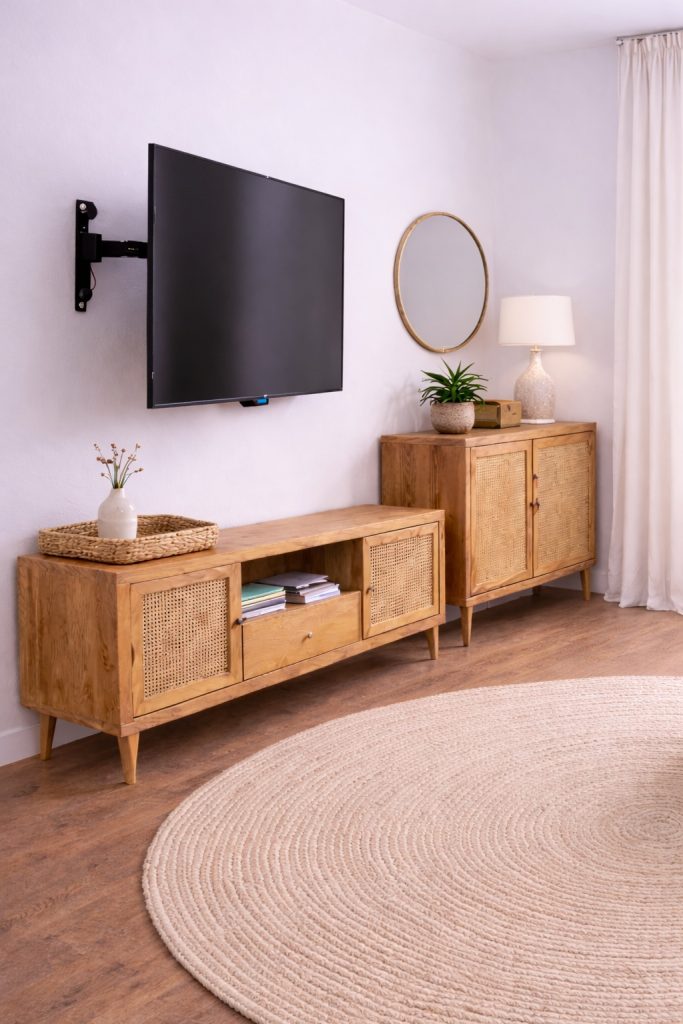
Mounting the TV on a swivel arm gives you freedom from a fixed seating layout. You can angle the screen toward the sofa when needed, but keep your furniture oriented for conversation, comfort, or flow the rest of the time—a smart choice for small or awkwardly shaped rooms. The close-up highlights the adjustable arm that makes flexible viewing possible.
6. Create Calm With a Symmetrical Arrangement
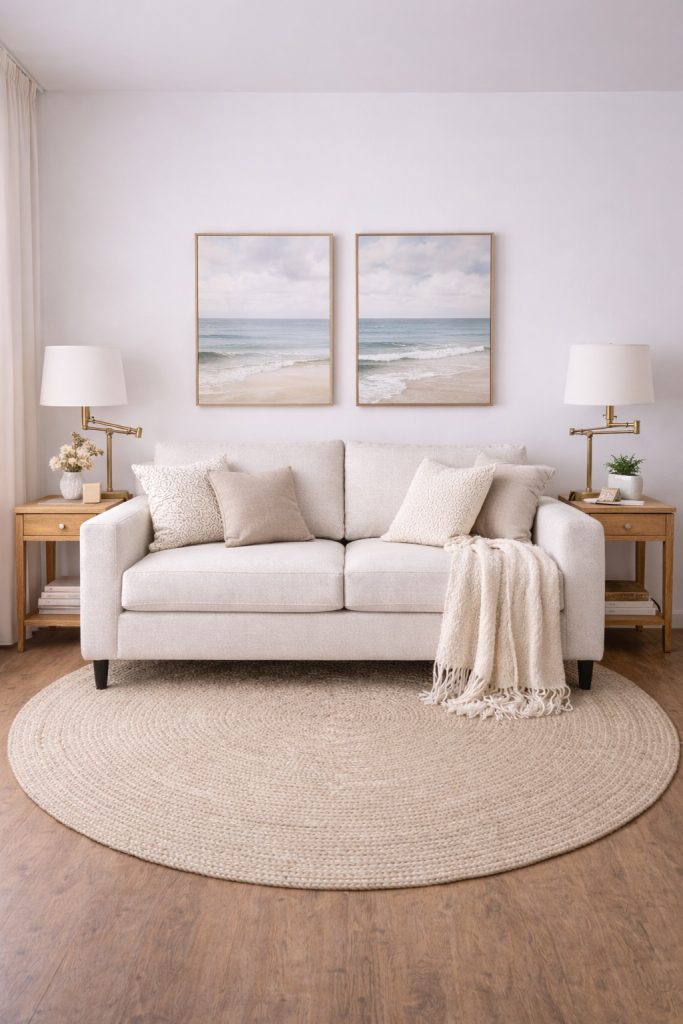
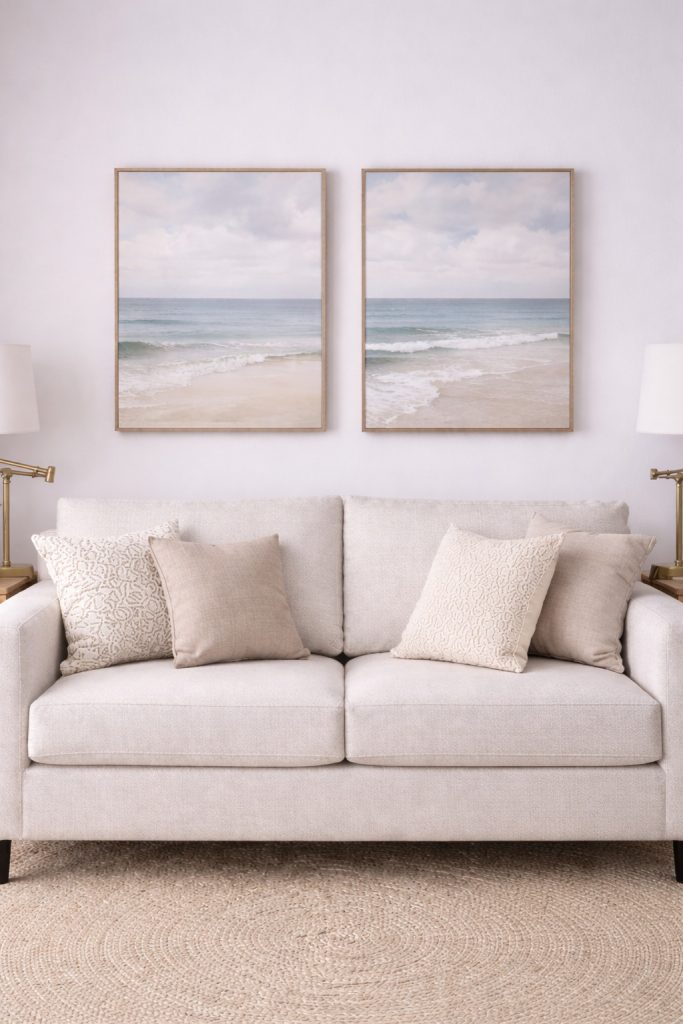
Symmetry adds instant order to compact spaces, making them feel balanced, polished, and restful. Centering the sofa and pairing it with matching lamps, tables, and artwork creates a visually calming setup. The close-up reinforces this harmony through coordinated colors, shapes, and light styling.
7. Let One Statement Piece Lead the Design
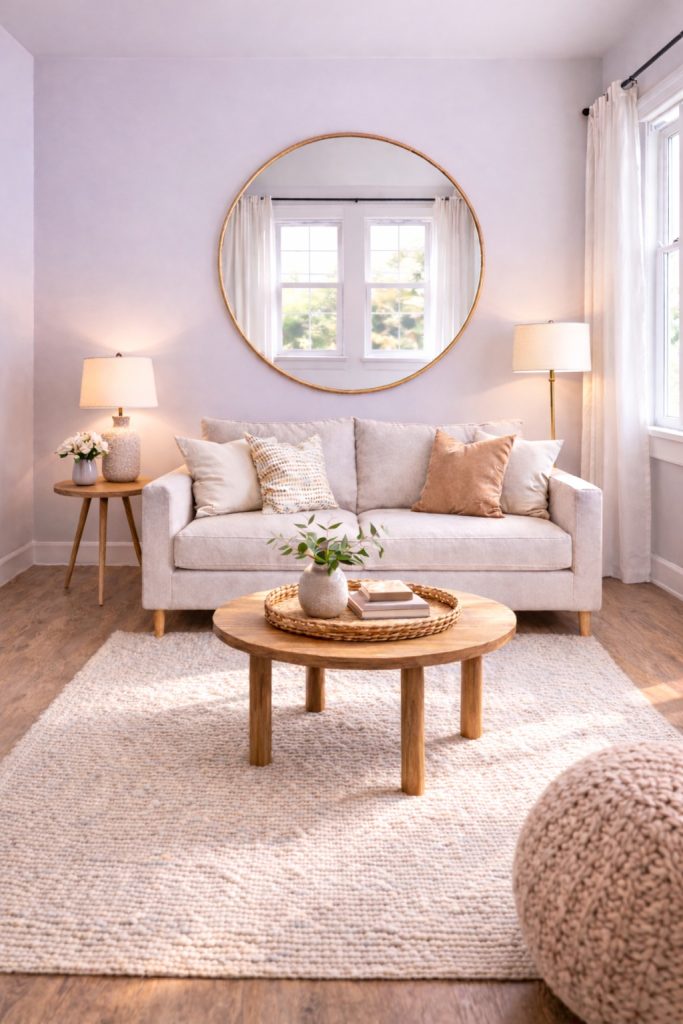
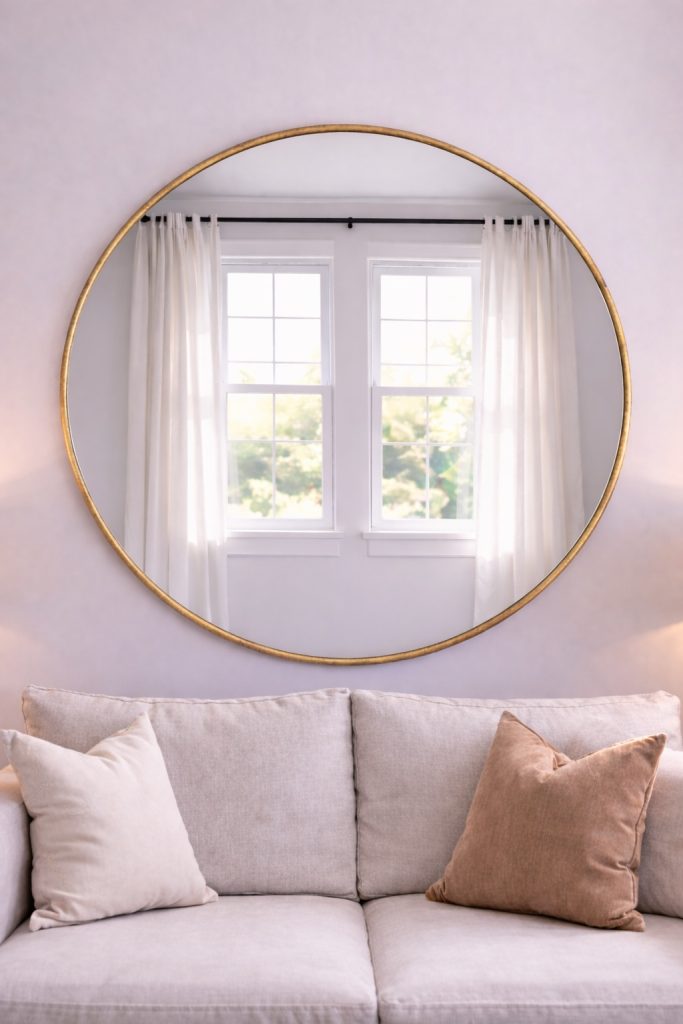
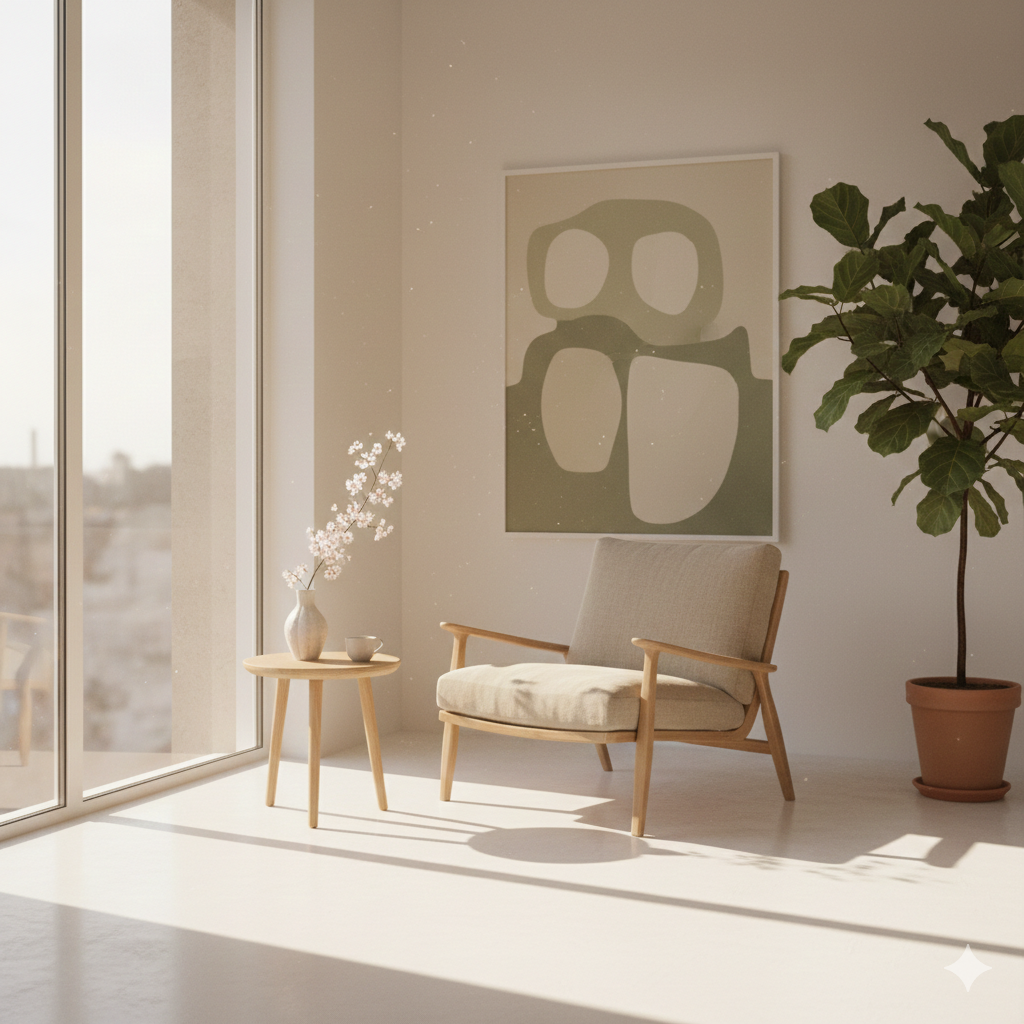
A bold focal point—like a large mirror, sculptural chair, or oversized artwork—adds personality to a small living room without overwhelming it. The wide shot shows a statement piece anchoring the space, while the detail shot highlights how minimal surrounding décor keeps the room visually clear.
8. Define Clear Zones in a Multi-Purpose Living Space
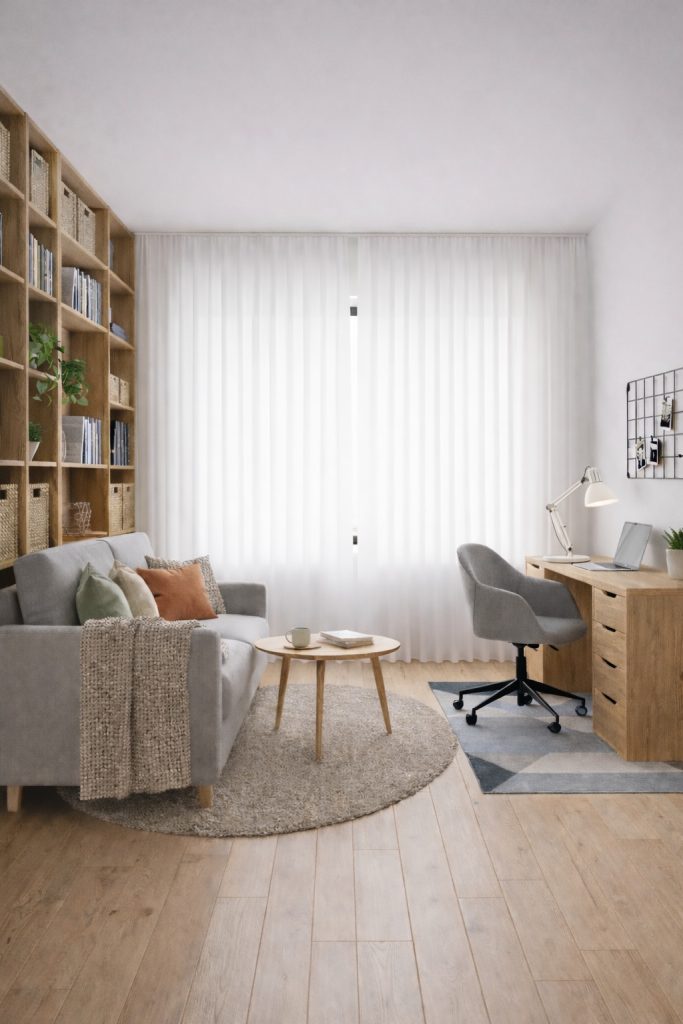
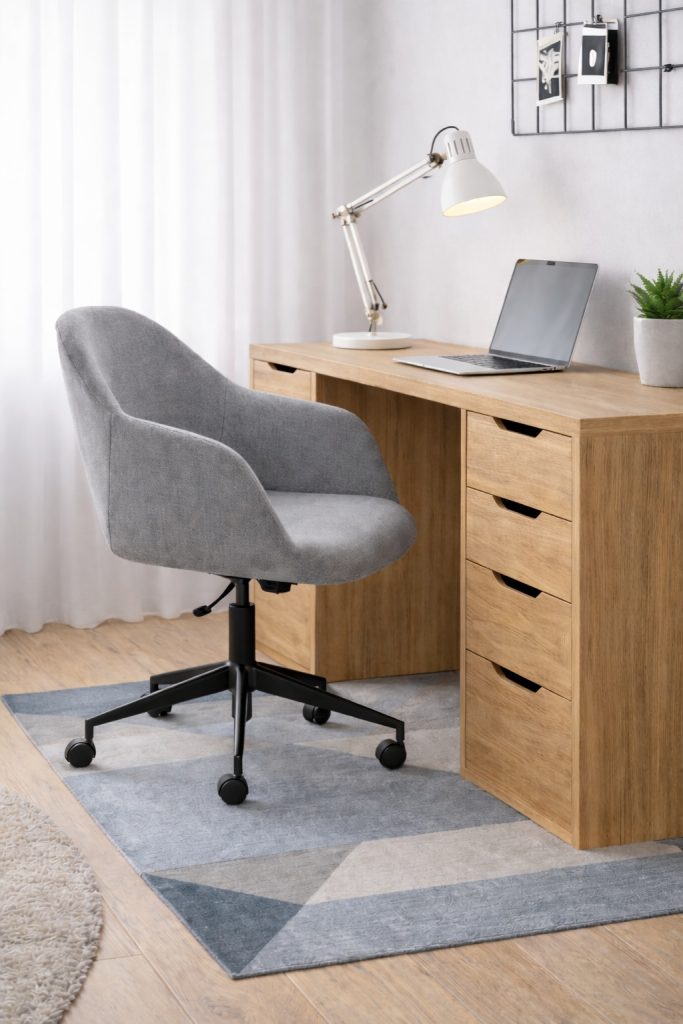
In a studio or open-concept apartment, separating the living area from the workspace or dining zone keeps the room functional and visually organized. Rugs, shelving, and lighting shifts create subtle but clear boundaries. The close-up emphasizes textiles, greenery, and desk styling that help each zone feel defined.
Shopping Recommendations for Ideas 4–8
Shop flexible furniture and decor designed for small apartments, multifunctional layouts, and light-filled modern spaces.
Styling Tips for Small Living Rooms (That Make a Big Impact)
Designing a small living room requires being intentional about every detail—from furniture scale and color palette to lighting and décor. Whether you’re working with a compact apartment, a long narrow layout, or a multifunctional living area, these styling strategies help maximize your square footage and make the room feel brighter, larger, and beautifully cohesive.
1. Stick to a Cohesive Color Palette
Choose two or three core colors and repeat them throughout the room to create harmony. A consistent palette reduces visual clutter and helps tie the space together, which is especially important in smaller rooms.
2. Use Sheer or Light-Filtering Curtains
Natural light is your most powerful design tool. Sheer or light-filtering curtains brighten the space, soften harsh sunlight, and help the room feel open and airy.
3. Add Depth Through Texture Instead of Busy Patterns
Layering natural textures—linen, wool, boucle, woven baskets, matte ceramics—adds visual interest without overwhelming the room. Texture brings richness and dimension while keeping the design calm.
4. Choose Furniture With Visible Legs
Sofas, chairs, and tables with open bases give the illusion of more floor space. This “lifted” look helps make a compact living room feel more spacious and breathable.
5. Opt for Multi-Functional Furniture Pieces
Small spaces benefit from furniture that does double duty. Consider nesting tables, storage ottomans, slim desks that can also serve as consoles, or furniture with hidden compartments.
6. Use Rugs to Define Each Zone
In multifunctional apartments—especially studios—rugs help visually distinguish areas for lounging, dining, and working. A round rug under the seating area and a rectangular rug under a desk can clearly define each function without adding clutter.
7. Mix Open Shelving With Closed Storage
Open shelving allows you to style curated décor, while closed storage hides everyday items. Balancing the two creates a practical and aesthetically pleasing layout.
8. Bring in Plants for Softness and Life
Plants add warmth, texture, and organic shape. Even a few well-placed greens can soften hard lines and bring natural movement into the room.
9. Keep Surfaces Lightly Styled
Edit surfaces intentionally. A simple combination—like a vase, a candle, and a small stack of books—keeps the room polished and uncluttered.
10. Use Mirrors to Expand Light and Space
Mirrors bounce natural light throughout the room, visually doubling the sense of openness. Place one opposite a window for maximum brightness.
11. Start With Soft Neutrals, Then Layer in Accents
Neutral foundations help small spaces feel airy and unified. Once the base is set, add interest and personality through artwork, pillows, greenery, and textured accessories.
Smart Solutions for Small Living Rooms: Frequently Asked Questions
Small apartment living rooms often serve multiple purposes at once. These questions address the most common challenges—furniture placement, zoning, lighting, and how to make the most of limited square footage.
1. How do I arrange furniture in a small apartment living room?
Start by identifying the room’s focal point—a window, TV wall, or standout artwork. Position your seating to support comfort and flow, and avoid blocking your natural pathways. Floating the sofa slightly off the wall helps create a space that feels open and breathable.
2. What size sofa works best in a small living room?
Slim-profile two-seaters, loveseats, or compact L-shaped sectionals are ideal. Sofas with narrow arms or visible legs maintain a lighter look and prevent the room from feeling weighed down.
3. How can I make a small living room feel bigger?
Use light colors, low-profile rugs, mirrors, layered lighting, and minimal décor. Avoid overly bulky furniture or too many competing focal points.
4. Should I use a rug in a small living room?
Yes—rugs ground your layout and provide visual definition for your seating area. A rug that extends under at least the front legs of your sofa helps unify the room.
5. Where should I place the TV in a small apartment?
A wall-mounted TV saves valuable floor space. A swivel mount offers even more flexibility, allowing you to angle the screen toward different seating arrangements without letting it dictate the layout.
6. How do I create separate zones in a small living/dining room?
Use rugs, shelving, or lighting changes to distinguish each zone. Furniture placement can also create subtle boundaries without closing off the room.
7. Can I mix different wood tones in a small living room?
Yes—mixed wood tones look intentional when undertones match. Repeat each tone at least twice to keep the palette cohesive.
8. What lighting works best in a small apartment living room?
Layered lighting is essential: combine ambient lighting with task lighting (like floor or desk lamps) and accent lighting to highlight décor or create warmth.
9. How much décor is too much in a small living room?
If surfaces look busy or your eye doesn’t know where to rest, it’s a sign to edit. Choose fewer, meaningful pieces to maintain a clean and calm aesthetic.
10. Can I use a large statement piece in a small living room?
Absolutely—one oversized artwork, mirror, or sculptural piece can anchor the room and simplify the design, preventing the space from feeling cluttered.
Editor’s Picks: Small-Space Living Room Essentials
A curated roundup of versatile small-apartment favorites that work beautifully across all eight layout ideas.
This shopping guide includes affiliate links, as noted in the disclosure at the top of this post.
Finishing Touches
Thoughtful layout and styling choices can turn even the smallest living room into a space that feels intentional, bright, and comfortable. With just a few adjustments—and the right pieces—you can shape a home that supports your lifestyle and feels beautifully put together. A few smart adjustments can completely transform the look and feel of your home.
Ready to Bring Your Space to Life?
Explore the curated shopping recommendations sections above to find small-space–friendly furniture and décor that match the layouts you loved. These Amazon search links make it easy to discover pieces that fit your style, support your space, and help you design a living room that feels uniquely yours.